
Liposomal Vitamin C Powder
Phospholipid encapsulation — optimised absorption, free dosing
In brief
- What is it?
- Vitamin C encapsulated in a bilayer of sunflower phospholipids — liposomes — then dried into a free-flowing powder. It is not pure vitamin C: the liposomal envelope is part of the product.
- Sizes and prices
- 100 g — €39.00 · 250 g — €79.00 · 500 g — €129.00. Sold as powder only.
- Vitamin C content
- Lower than pure ascorbic acid: the phospholipid envelope is part of the powder's weight. The exact figure for each batch is given on the label and in its certificate of analysis.
- Why powder?
- Dose adjustable to the gram, no capsule shell to digest, and a markedly lower cost per gram than the capsule format.
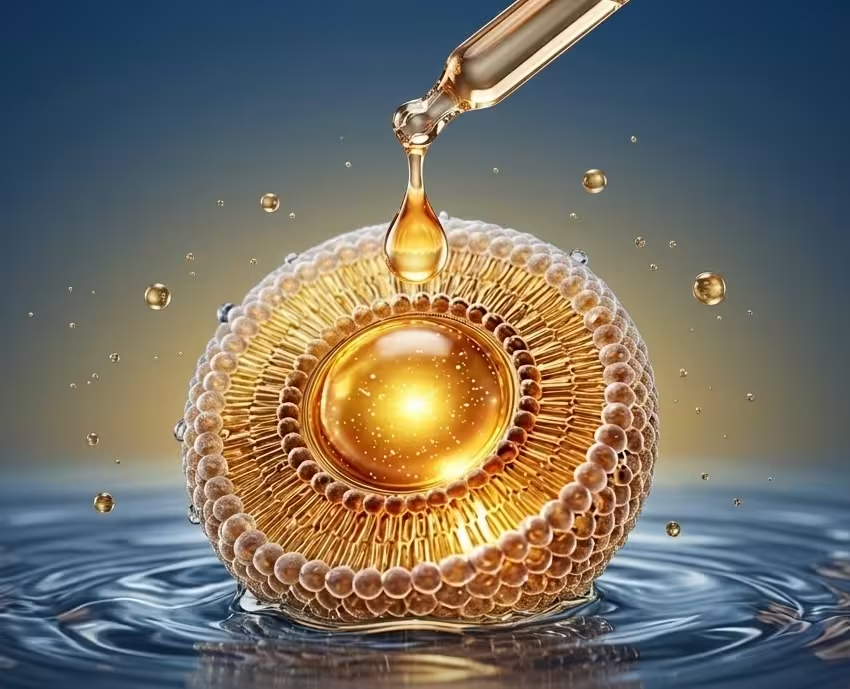
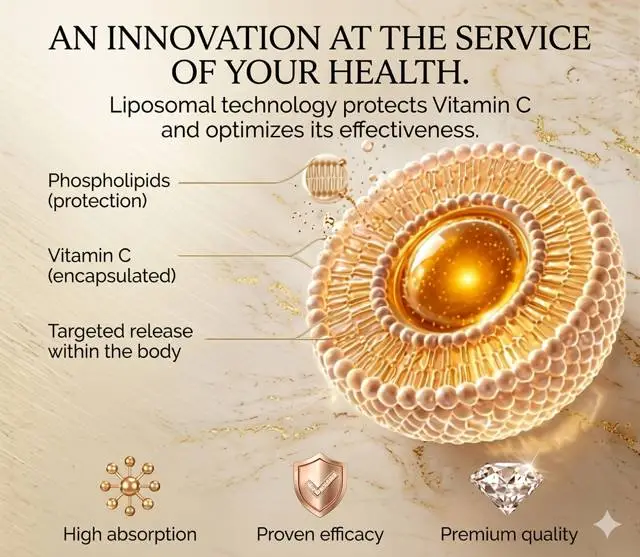
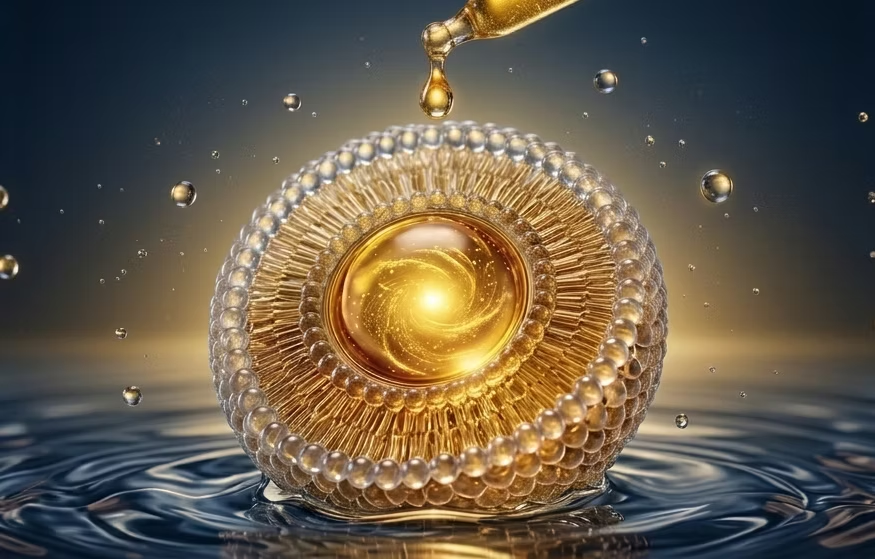
Liposomal vitamin C powder is vitamin C wrapped in a bilayer of sunflower phospholipids — the same family of molecules that make up our cell membranes. These vesicles, the liposomes, protect the vitamin C as it passes through the digestive tract.
This product was previously offered as capsules. It is now sold as powder only, for three concrete reasons:
- ⚖️ Free dosing — you adjust to the gram instead of being tied to a capsule's fixed dose
- 🚫 No shell — no HPMC envelope to digest, no filling excipient tied to encapsulation
- 💶 Cheaper per gram — encapsulation accounts for a significant share of a supplement's cost
Liposomal, pure or buffered — which one?
The three answer different needs, and many of our customers combine two of them:
- Pure L(+) ascorbic acid — the reference for high intakes at the best cost. Sour in the mouth and in solution.
- Calcium ascorbate — the same vitamin C at neutral pH, for sensitive stomachs.
- The liposomal form — encapsulation aims at better uptake at an equal dose. It is the most technologically worked form, and the most expensive per gram of vitamin C.
What the research says
Published work on liposomal vitamin C (Davis et al., 2016; Łukawski et al., 2020) reports higher plasma concentrations than non-encapsulated ascorbic acid at an equivalent dose. The studies remain small and their protocols heterogeneous: we present this form as an optimised-uptake option, not as a substitute for medical care.
How to use
Dissolve the dose in a small volume of cold liquid (water, juice) and drink straight away. Stir gently.
Never heat it, and never add it to a hot drink: heat destabilises the phospholipid bilayer and the product loses exactly what sets it apart from ordinary vitamin C. Avoid high-speed blenders too.
Dose and spacing
The usual dose is between 1 and 3 g of powder per day depending on your needs.
As with any vitamin C, it is better to split high intakes into two or three servings across the day rather than taking everything at once. Use a dosing spoon for a repeatable dose, or a precision scale for milligram accuracy.
Reference intake: 110 mg/day (ANSES 2021). EFSA tolerable upper intake level: 2,000 mg/day of vitamin C from all sources combined. Do not exceed the recommended daily dose. Food supplement: not a substitute for a varied diet and a healthy lifestyle.
Storage
Liposomal powder is sensitive to moisture and heat. Keep the pouch or jar tightly closed, away from light, in a cool dry place. Scoop with a perfectly dry spoon.
Ingredients
L-ascorbic acid, sunflower phospholipids (liposomal envelope).
Nutritional values
The vitamin C content of a liposomal powder depends on the loading rate of the raw material: the sunflower phospholipid envelope is part of the powder's weight. The batch's nutrition declaration — milligrams of vitamin C per recommended daily portion and percentage of the NRV — appears on the jar label and in the certificate of analysis, which we send on request. Made in Europe.
What the liposomal form is not
One gram of liposomal powder does not deliver one gram of vitamin C: the phospholipid envelope and the carrier are part of the weight. At an equal vitamin C intake, this form costs more than pure ascorbic acid — what you are buying here is the encapsulation.
What you buy. Nothing more.
Every batch is tested. Results provided on request.
The encapsulation, not the weight of vitamin C. At an equal intake this form costs more than pure ascorbic acid — we own that and write it down.
Identified manufacturer. Documented supply chain.
DGCCRF registered. Labelling compliant with EU Regulation 1169/2011.
Chargement des avis…